
12 November 2026 | London
12 November 2026 | London
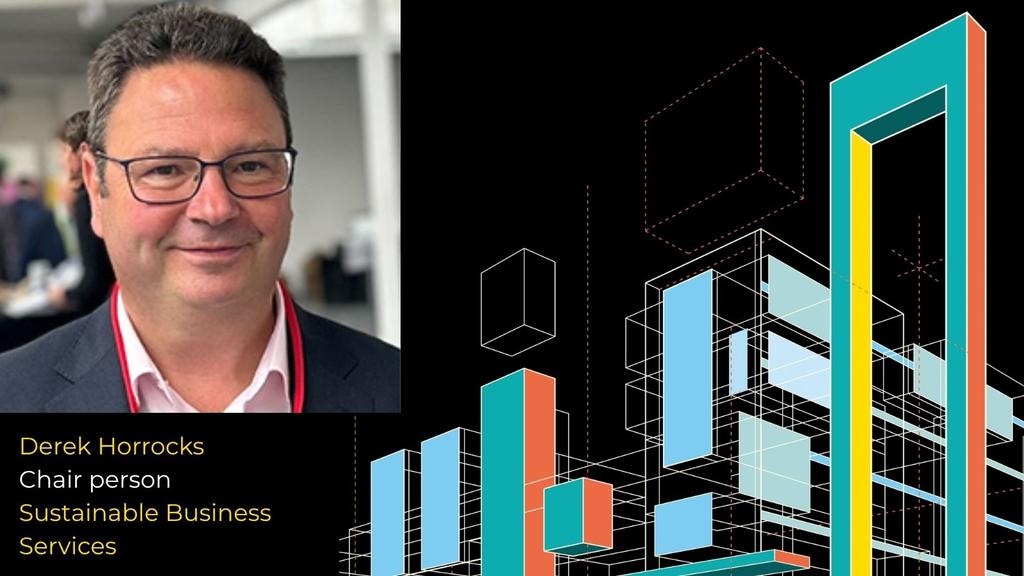
Derek Horrocks, owner and chair of principal contractor Sustainable Building Services (UK) Ltd (SBS) and chair of the National Home Decarbonisation Group (NHDG), explains the role that a fabric first approach will play in delivering retrofit at scale across the UK.
Where previous schemes led by DESNZ tended to reflect a ‘fabric first’ philosophy – prioritising improvements to a building's walls, roofs, floors and windows before layering on technology – the Warm Homes Plan brings electrification to the foreground.
Yet we must bear in mind that renewable technologies can only perform to their full potential when the buildings they serve are thermally efficient. Homes in the UK are among the least energy efficient in Europe and lose heat up to three times faster than on the continent. So, if a heat pump is installed in a poorly insulated home, it must work harder and it costs more to run. Retrofit specialists are prepared for a reorientation towards electrification – but the properties have to be ready as well.
This is why the philosophy of ‘fabric first’ still has a place in the conversation. In a practical sense, fabric first means improving a building envelope's thermal and structural performance to reduce energy demand. That means achieving strong U-values in walls, roofs and floors; reducing thermal bridging; managing moisture and ventilation; and ensuring that retrofit measures are durable and low-maintenance. These processes can form the platform on which technology can be added.
Government policy already supports this sequencing through frameworks like PAS 2035, which embeds whole-house assessment into publicly funded retrofit. And with the 2030 Minimum Energy Efficiency Standards consultation signalling that fabric performance is likely to be one required metric in the dual metric assessment, the regulatory outlook is still one in which upgrading a property’s fabric plays a vital part.
We should think of upgrading materials less as a priority that competes with technology, and more the foundation that makes electrification work effectively. A fabric first approach reduces a building's energy demand at the source, which means heat pumps can be specified at lower capacities, solar generation covers a greater share of a household's needs, and the overall cost of retrofit comes down.
Air source heat pumps can deliver three to four units of heat for every unit of electricity consumed. Solar PV can save over £600 for an average household each year, and battery storage can allow households to store their own energy – both reducing dependence on the grid and shielding residents from volatile energy prices. These are technologies that fundamentally change the economics of running a home, and the Warm Homes Plan is right to back them.
However, if whole-house approaches are imposed without explanation then misuse, dissatisfaction or underperformance can follow. Instead, residents need to understand how and why their new installations work – how to run a heat pump efficiently, when a battery is charging, why ventilation continues to matter even after insulation is improved.
The Warm Homes Plan provides a once-in-a-generation opportunity. But to realise the ambition means getting the methodology right: electrification and fabric improvement working together, delivered with residents’ support, at the pace and the scale the country needs. The two are not in tension. They are two halves of the same important solution.
For more information, please contact Lauren Bolton, Matthew Santos or Katie Nelson at Cartwright via sbs@cartwrightagency.com or on 0115 853 2110. Notes to editors About Sustainable Building Services (UK) Ltd: Established in 1976, Sustainable Building Services (UK) Ltd is a turnkey solutions provider specialising in retrofit energy efficiency and decarbonisation works.
The expert team takes charge of large-scale energy efficiency, microgeneration and planned maintenance programmes for the UK’s best-known registered social housing providers, all geared towards enhancing the living conditions of thousands of people every year. Experienced in delivering compliance at scale throughout the UK under PAS2030:2023 / MCS and PAS2035:2023 across projects totalling over £200m, Sustainable Building Services provides improvements to thousands of mixed-tenure properties per year.
This includes schemes under the Warm Homes: Social Housing Fund Wave 3, Warm Homes: Local Grant, and Optimised RetroFit Programme (ORP) Wales schemes.
For more information, please visit https://www.sustainablebuildinguk.com/